 Posted by
 Part 1: Casablanca to Fez.
Morocco has always conjured up the exotic for me, even before I saw Hideous Kinky back in 1998. Casablanca, Tangiers, Marrakesh – names that evoke Kasbahs, camels, exotic Riads and the vividest colours – I’m only surprised it took me so long to get here.
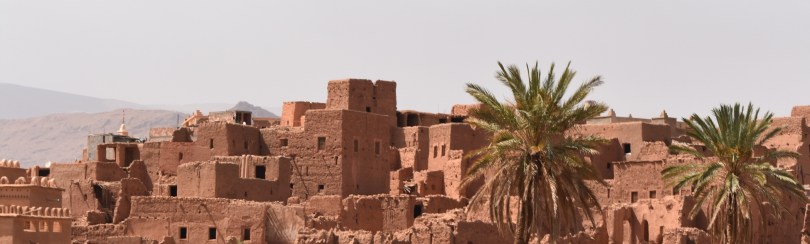
Morocco, or The Maghreb as it’s still known to Moroccans feels at once North African, European and Arabic. The historical occupation by Morocco of wide swathes of North Africa and Southern Europe, including Andalusia, and more recently the occupation of parts of Morocco by the French and Spanish has resulted in such a melange of language, architecture and cuisine that you could be forgiven sometimes for being confused about which country you’re actually in.
Casablanca! The name conjures up Hollywood romance and visions of a smoky bar with Bogart, Bergman and Sam playing it again. My first impression, however, wasn’t particularly positive, but to be fair to Casablanca we did arrive the day after Eid al-Adha. This is the Festival of Sheep, a major Muslim holiday and admittedly not a great time to arrive for vegetarians, as each family celebrates by sacrificing a sheep or goat. Following the festival the streets were very quiet and we were there too briefly to really explore.
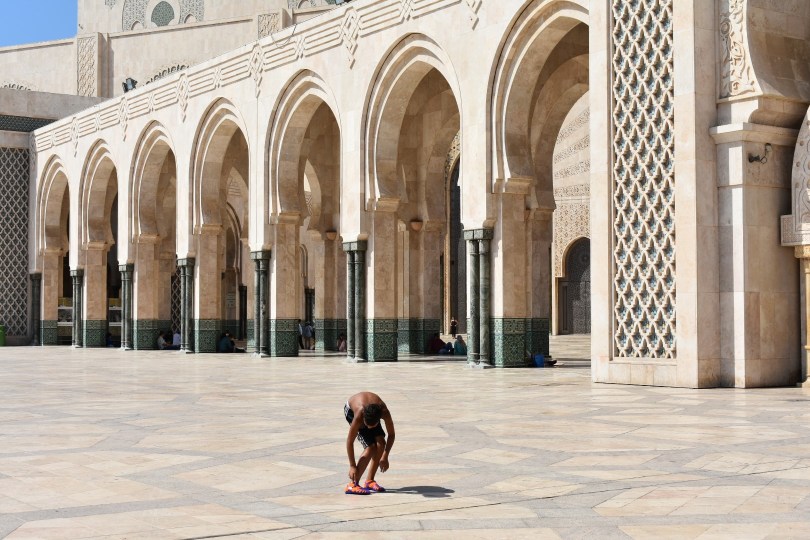
A must see in Casablanca, is the impressive Hassan II Mosque, the largest in Morocco, with room for 25,000 worshipers inside and a further 80,000 outside. It’s built partially on land and partially over the ocean, with walls of hand-crafted marble and a retractable roof. It’s really quite magnificent and worth taking the tour if you have time.
Early the next morning we loaded our bags into a 4 wheel drive and headed off on a remarkable adventure, visiting Rabat, the Capital and Administrative centre; Asilah, a former pirate village on the Barbary coast; Tangiers, just 18 kilometres across the Mediterranean from Spain and in the 1920s a destination for many European and American diplomats, spies and writers; Chefchaouen, the wondrous blue city; Meknes and the ancient Roman city of Volubilis; Fez, with it’s wonderfully preserved Medina, now a UNESCO world heritage site; Merzouga, deep in the Sahara; and Ouarzazate along the way, finally finishing up in Marrakesh.
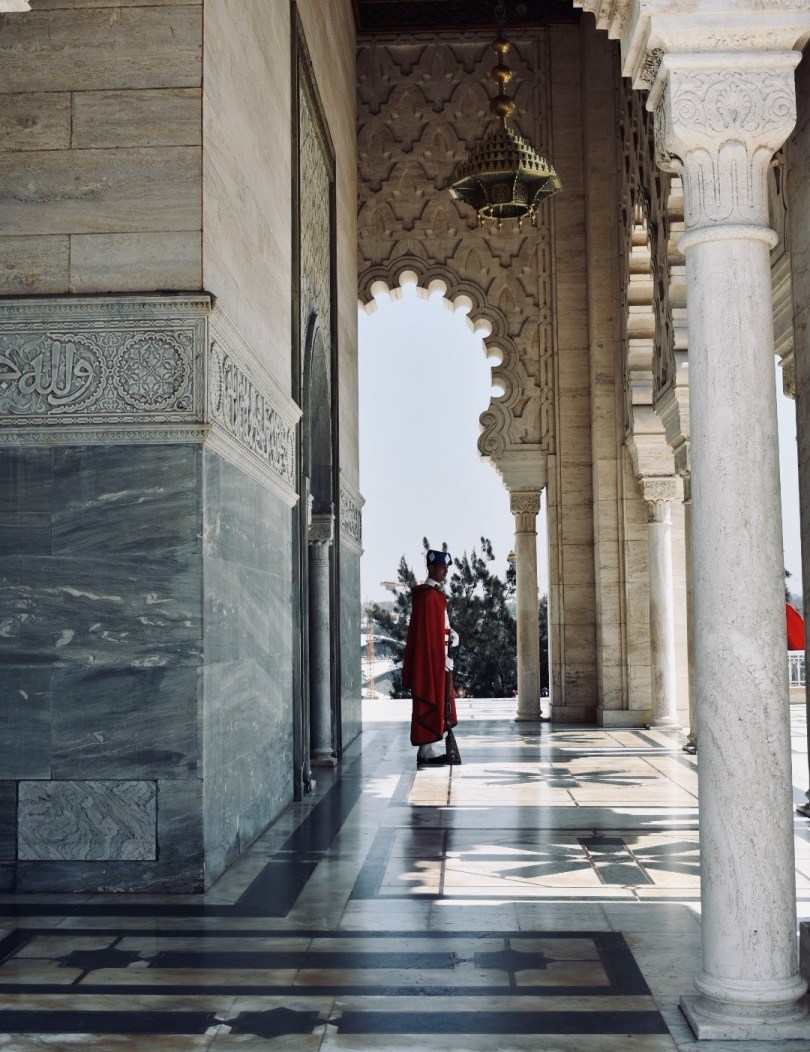
An elaborately dressed Royal guard stands watch at Mohammed V Mausoleum, Rabat
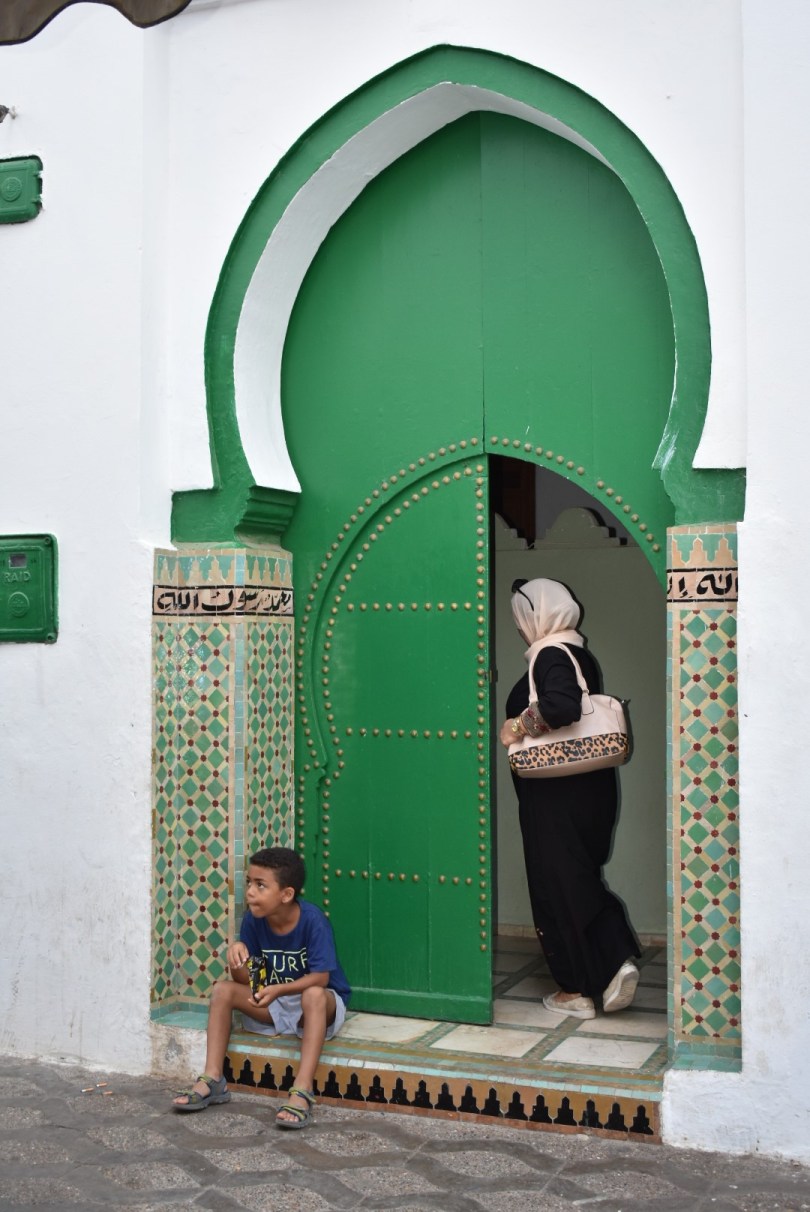
In the Medina, Asilah
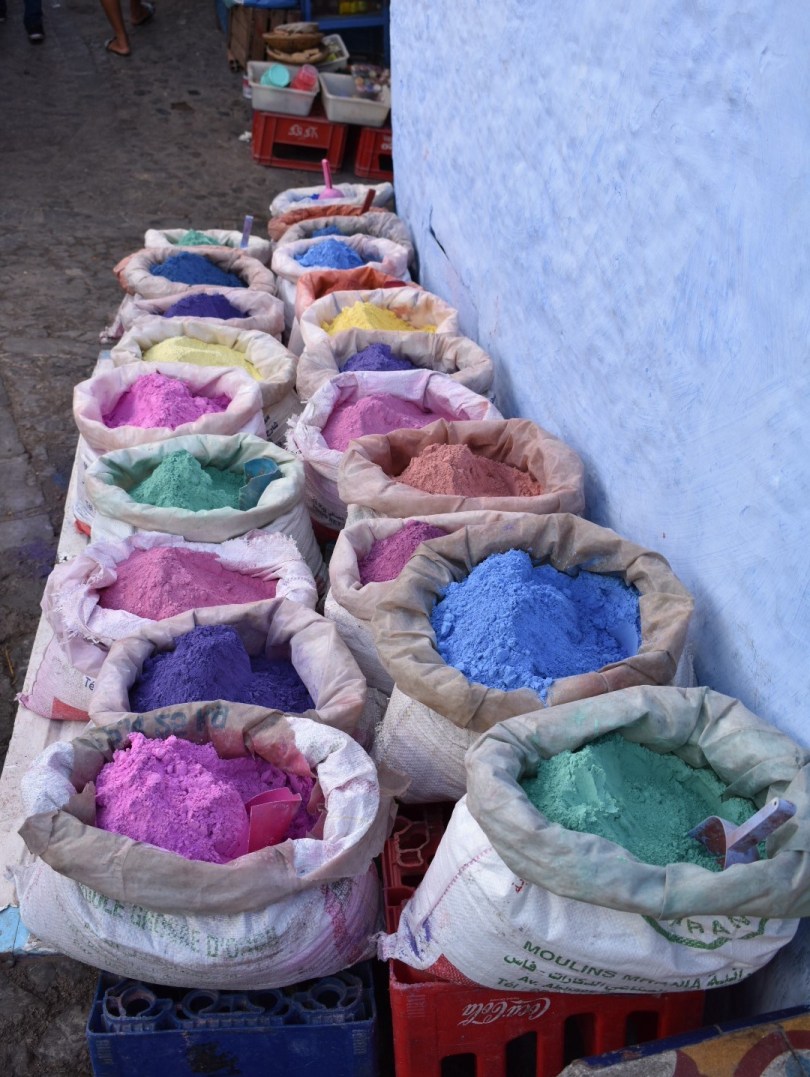
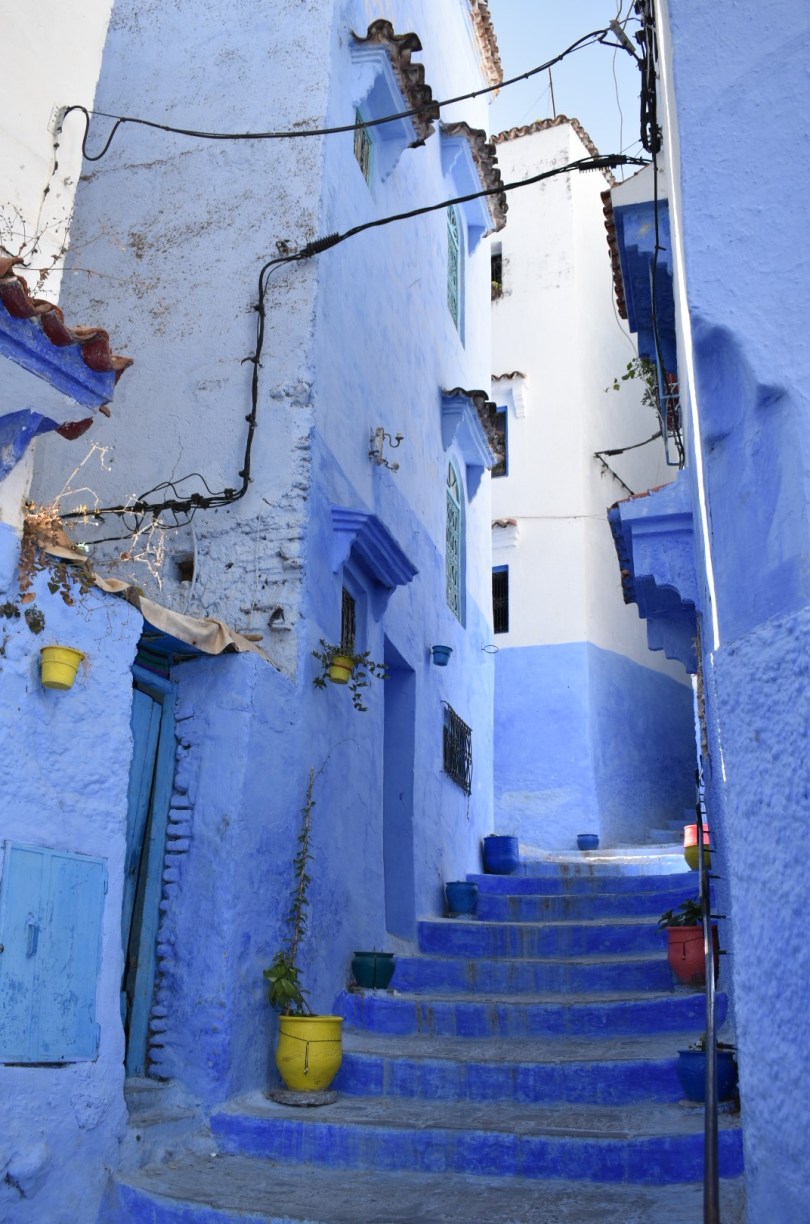
Chefchaouen, in the Rif Mountains was founded by the Moors in 1471 and subsequently welcomed Jewish and Muslim refugees driven out of Spain during the Spanish Inquisition in the 15th and 16th centuries. In a spectacular setting, nestled between two mountain peaks, the town has an almost magical air with walls, doors and windows in the Medina painted in hues of powdery blue, creating an almost dreamlike effect. Theories abound as to why the blue, but blue is said to symbolize the sky and heaven, and serves as a reminder to lead a spiritual life.
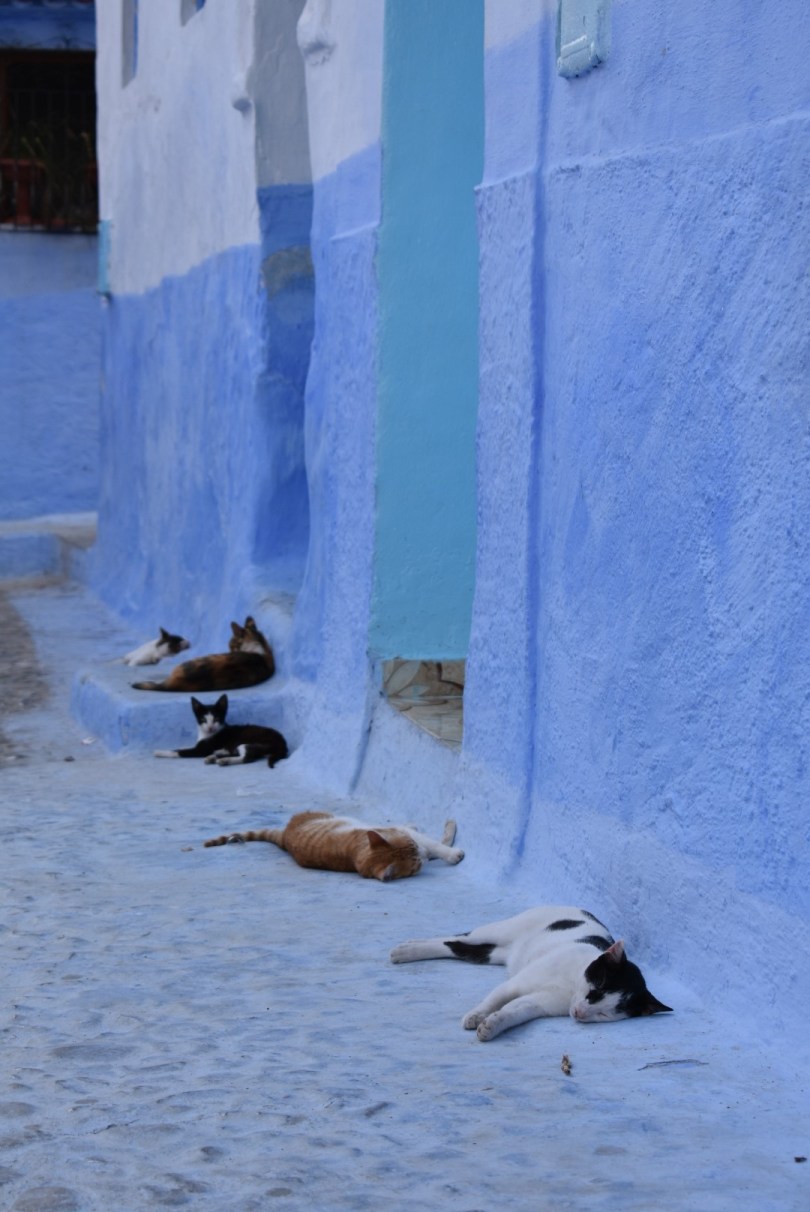
Bathed in blue, Chefchaouen
The Kasbah, dating from 1471, is still in remarkable condition and there are a number of mosques worth visiting, including a picturesque Spanish Mosque, perched high on the hill behind the town. Chefchaouen is worth a longer stay than the 1 night we spent there with many places of interest to visit nearby.
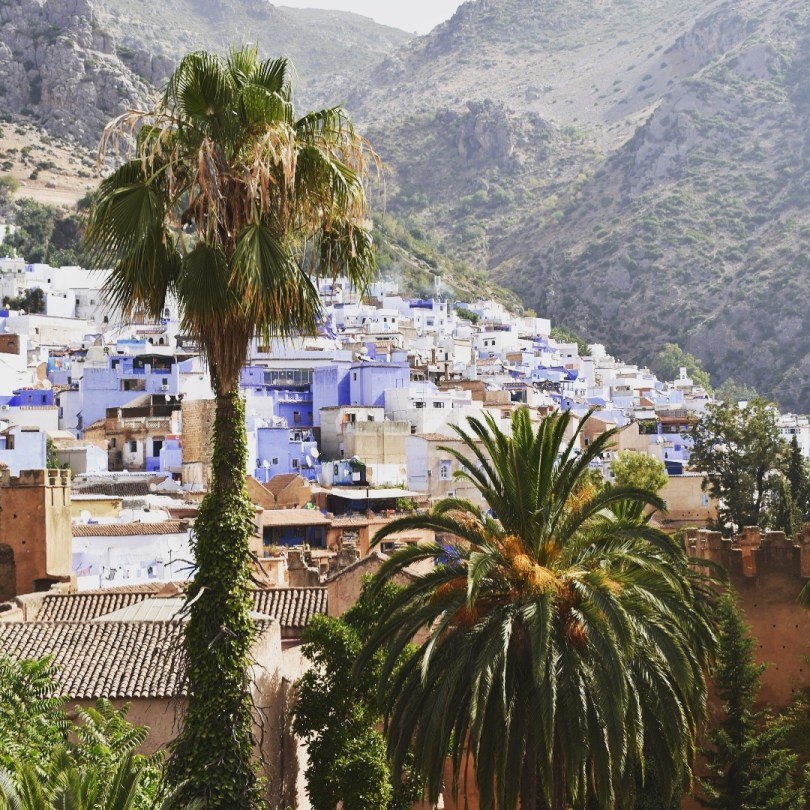
Picturesque Chefchaouen, viewed from the tower of the Kasbah.
En route to Fes the next day, we visited the ancient Roman town of Volubilis, considered the ancient capital of the kingdom of Mauretania. Settled first by the Berbers and Carthaginians before prospering under Roman rule from the 2nd century, Volubilis is one of the best preserved Roman towns in Morocco. Only a portion of the site has been excavated to date, but you can wander through remains of the Basilica, Thermae, the Temple of Jupiter, the Capitol and Triumphal Arch. I find it thrilling to wander amongst Roman ruins and try to imagine what life must have been like – probably not easy for either the Romans or their multitudes of slaves, but it is incredible when you think of what they managed to accomplish and the vast footprint they left behind.
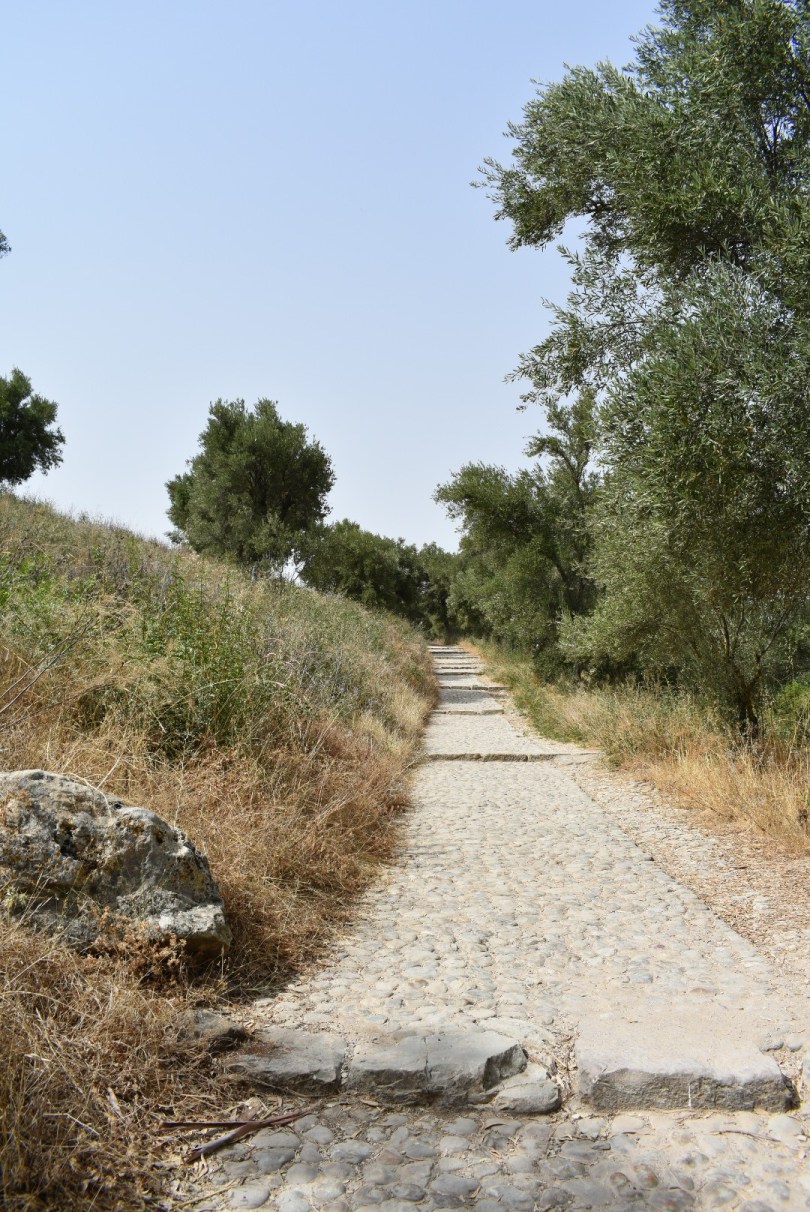
Surrounded by fertile plains with Olive trees dotting the countryside for miles around, Volubilis is very picturesque – even in spite of the searing heat on the day we visited.
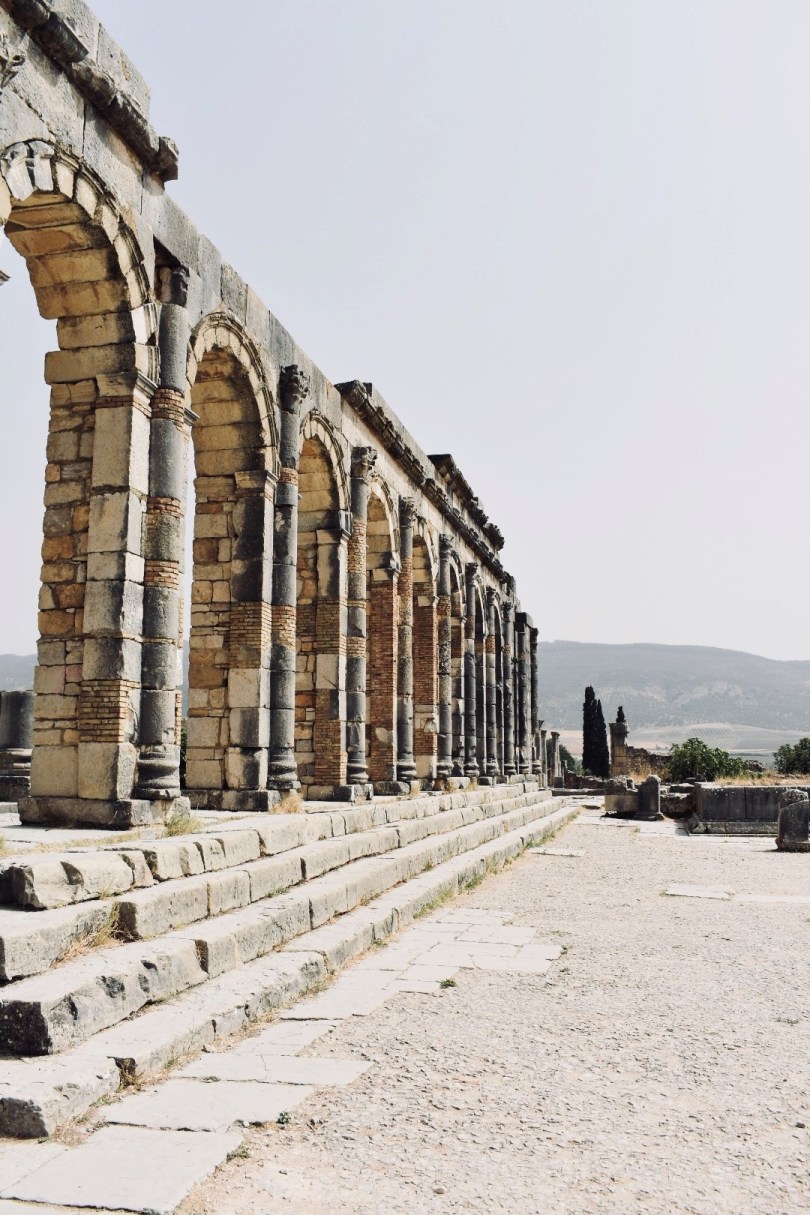
The remains of the Basilica
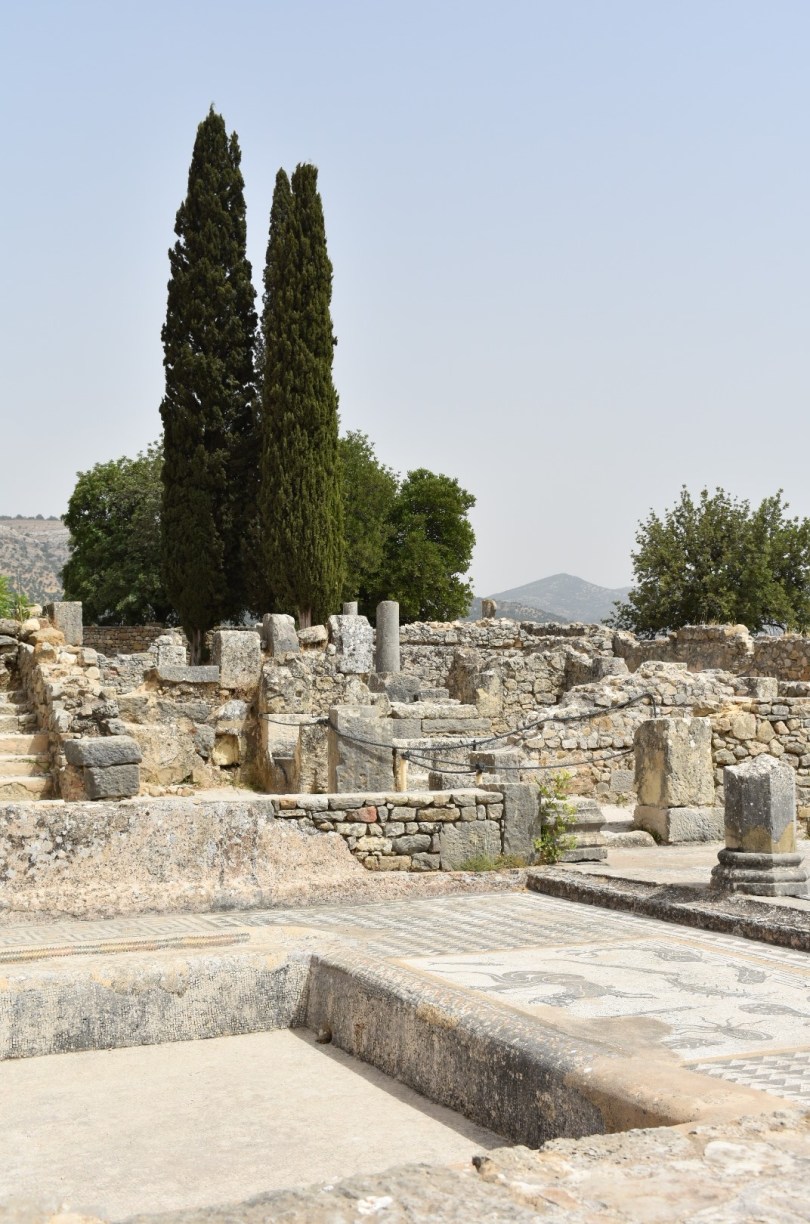
Impressively intact mosaics, Volubilis
Next on to the Imperial city of Fez, the second largest city in Morocco and home to the worlds oldest continuously functioning University, founded in 859 and located within the UNESCO protected Fez El-Bali Medina.
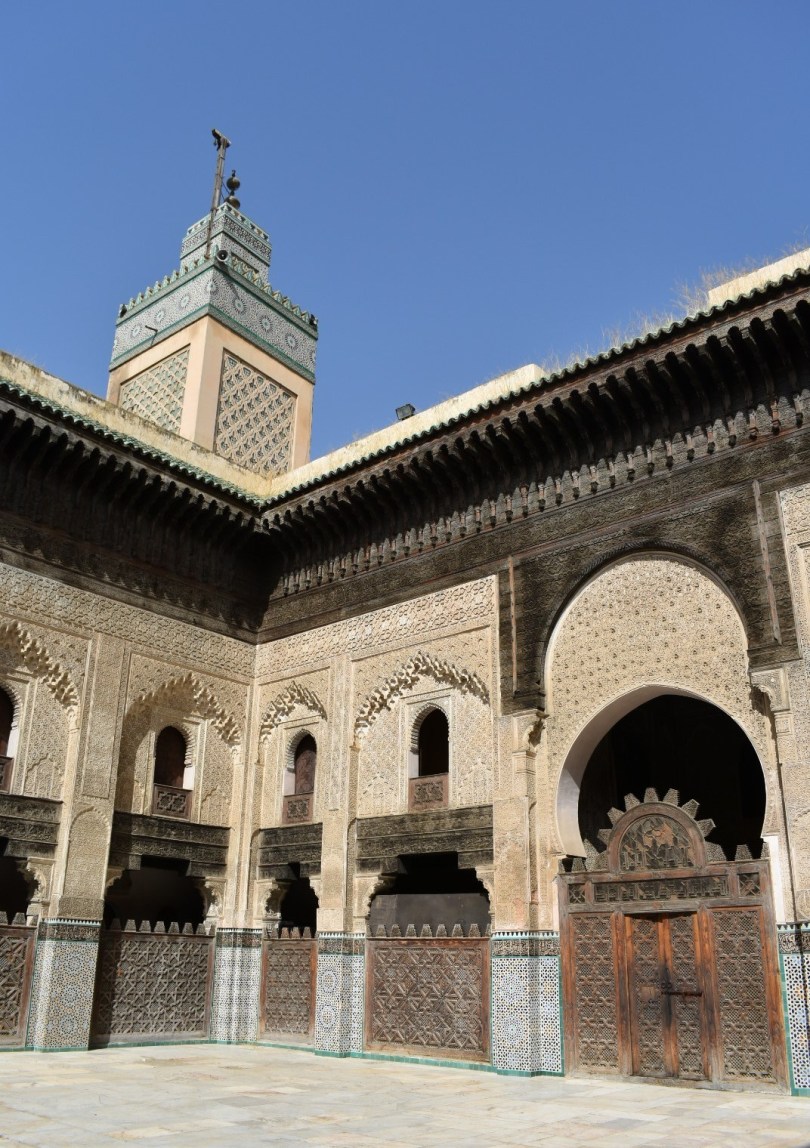
Madrasa, University of Al Quaraouiyine
The Fez El-Bali covering 540 acres is the largest Medina in Morocco and dates from the 9th Century. Slipping into it’s alleyways feels like travelling hundreds of years back in time with many things done the way they have been for centuries, including the impressive Chouara Tannery, built in the 11th century.
Here leather bags, jackets, poufs and shoes made from cowhide, kid, sheep and camel, are exported all over the world and are of excellent quality. The only way to get a glimpse of the tannery is by entering one of the surrounding leather goods shops (naturally!) where you’re provided with a sprig of fresh mint to hold to your nose as you survey the tannery in action from a strategic balcony.
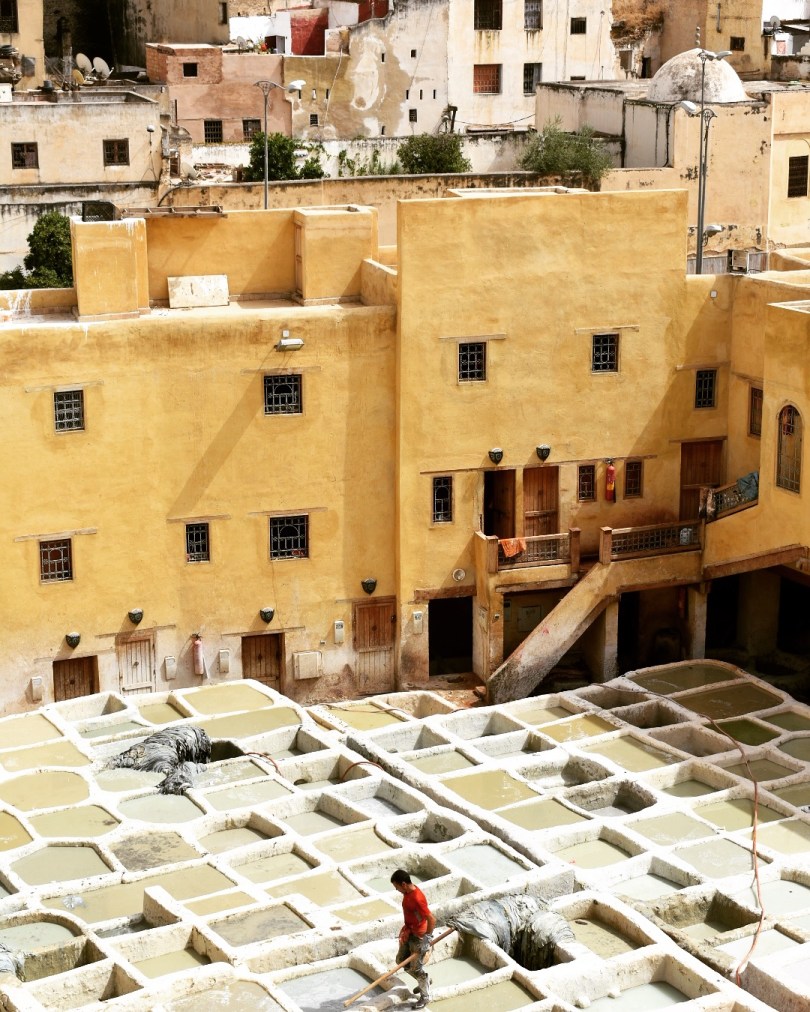
The first stage of the tanning process – soaking the skins in limestone vats filled with a mixture of cow urine, pigeon feces, quicklime salt and water, in order to break down the tough leather.
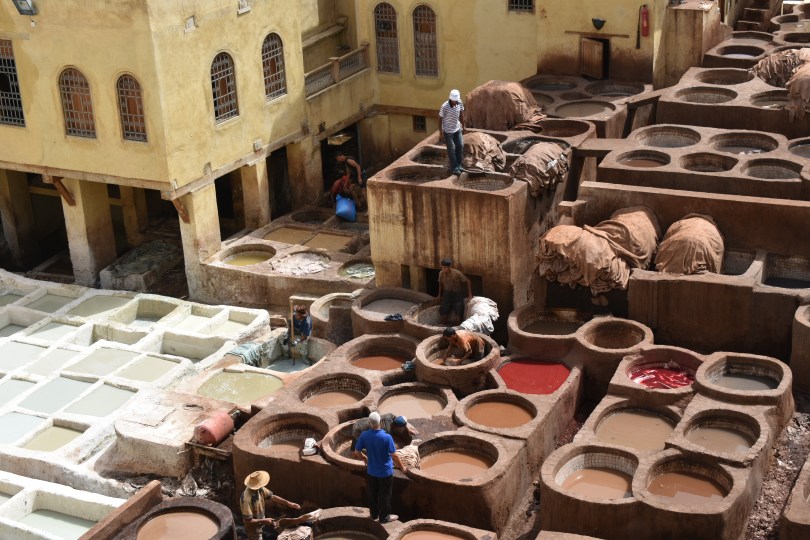
Next the skins are soaked in vats of vegetable dyes, such as poppy, indigo and henna
The smell is special and I can’t begin to imagine what it must be like to be submerged in the vats all day, but this is a job that has been passed down through families from generation to generation, and still is today.
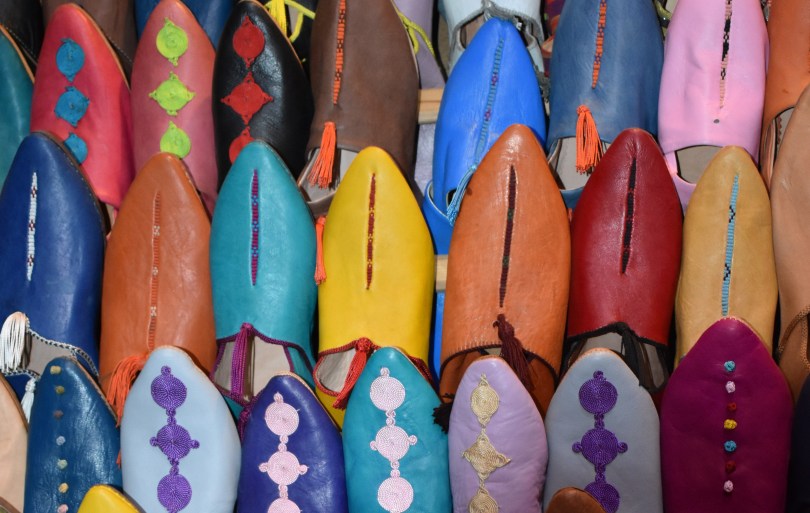
Babouche, brightly coloured Moroccan slippers
Lined with hundreds, or more likely thousands, of tiny shops and stalls selling all manner of crafts and produce, the Medina is a world within a world where it feels like time has stood still for centuries….
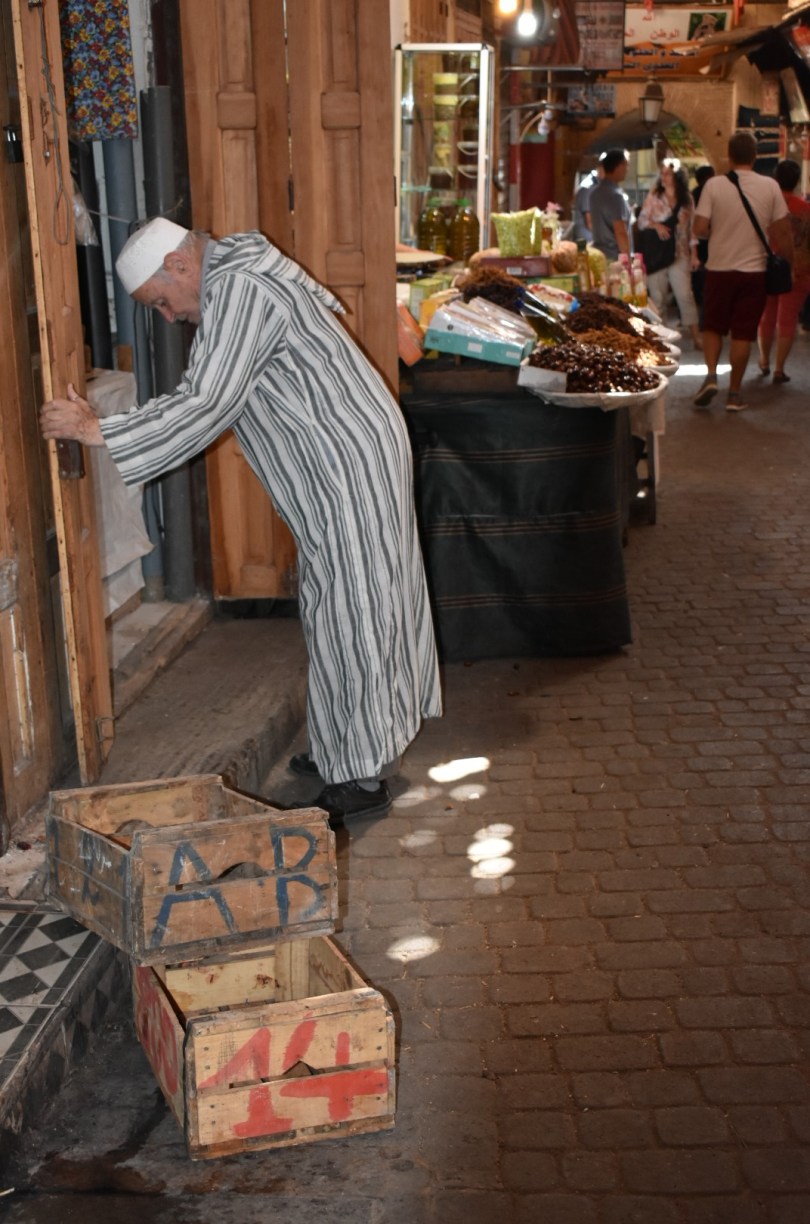
Opening up shop, Fez Medina
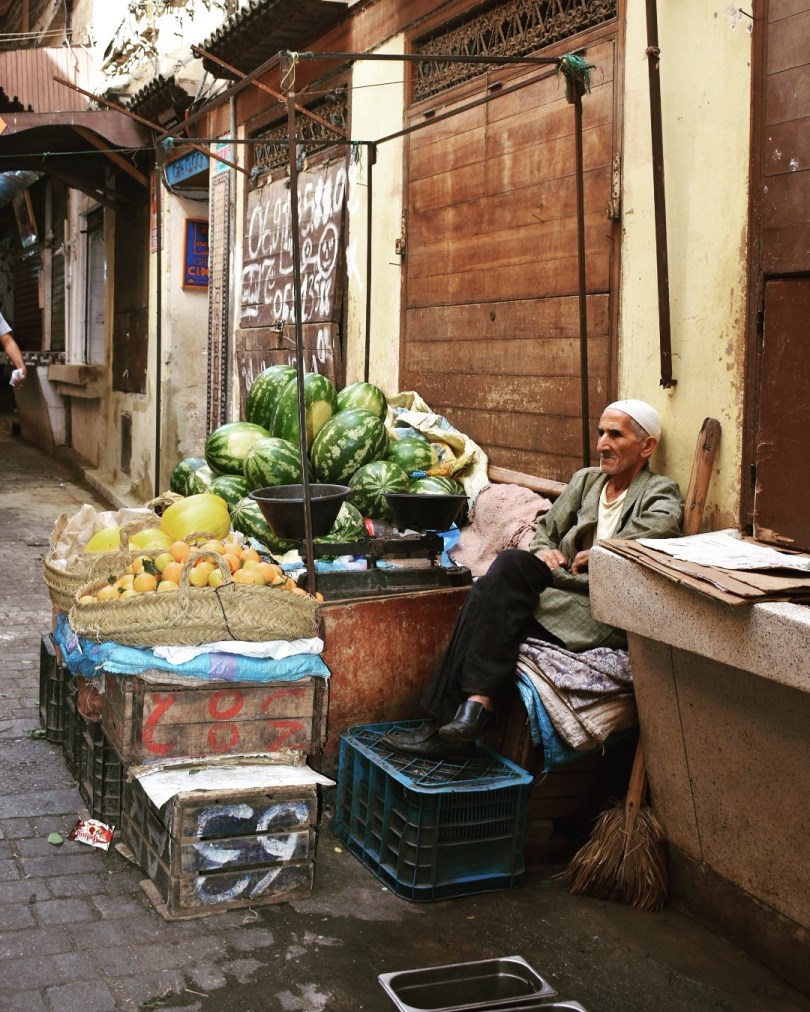
Patiently waiting for business, Fez Medina
One of the largest car free zones in the world, the Medina belongs to pedestrians, cats and the occasional donkey laden with goods…
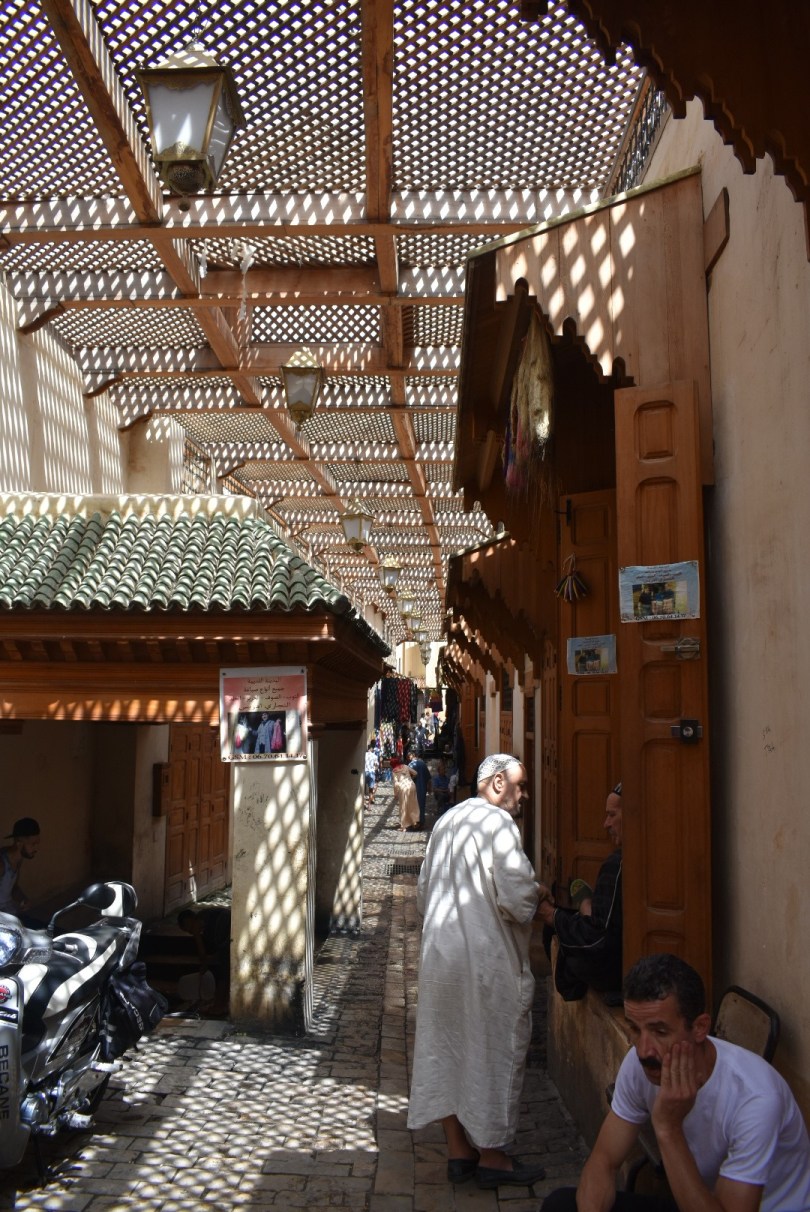
Dappled light filtering through the wooden latticework overhead
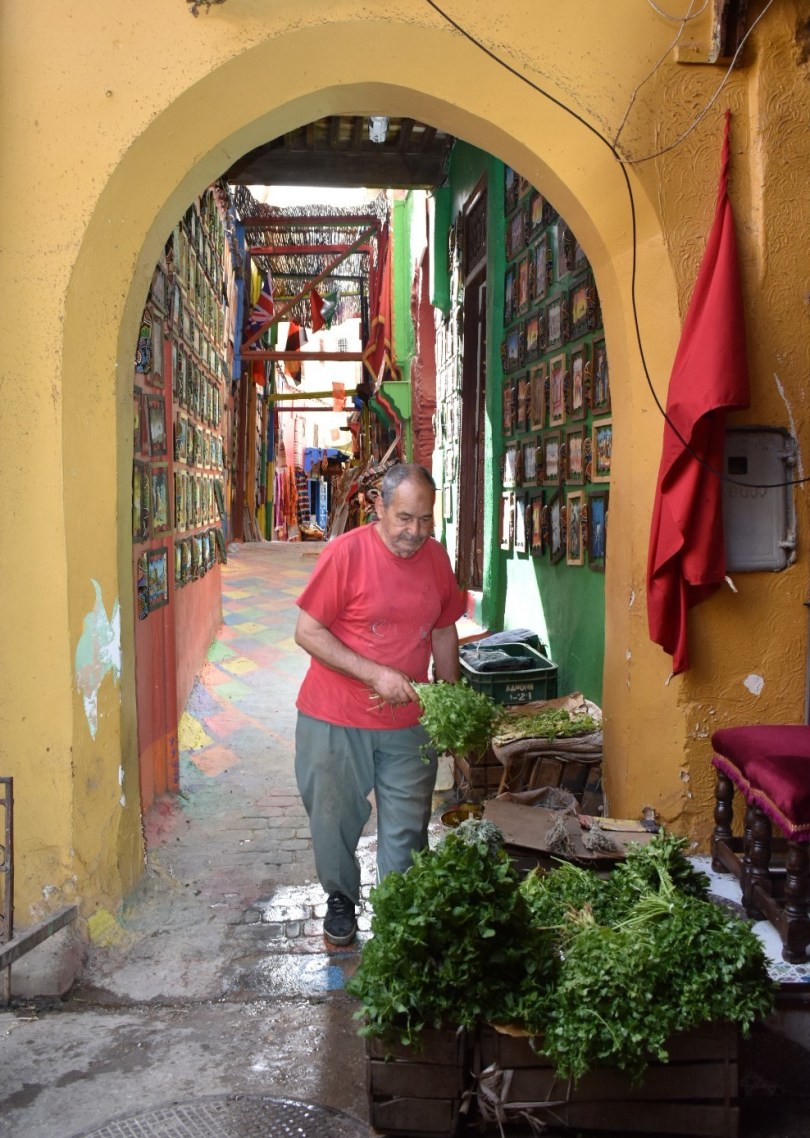
Bunches of mint for the delicious, sweet mint tea that is served everywhere
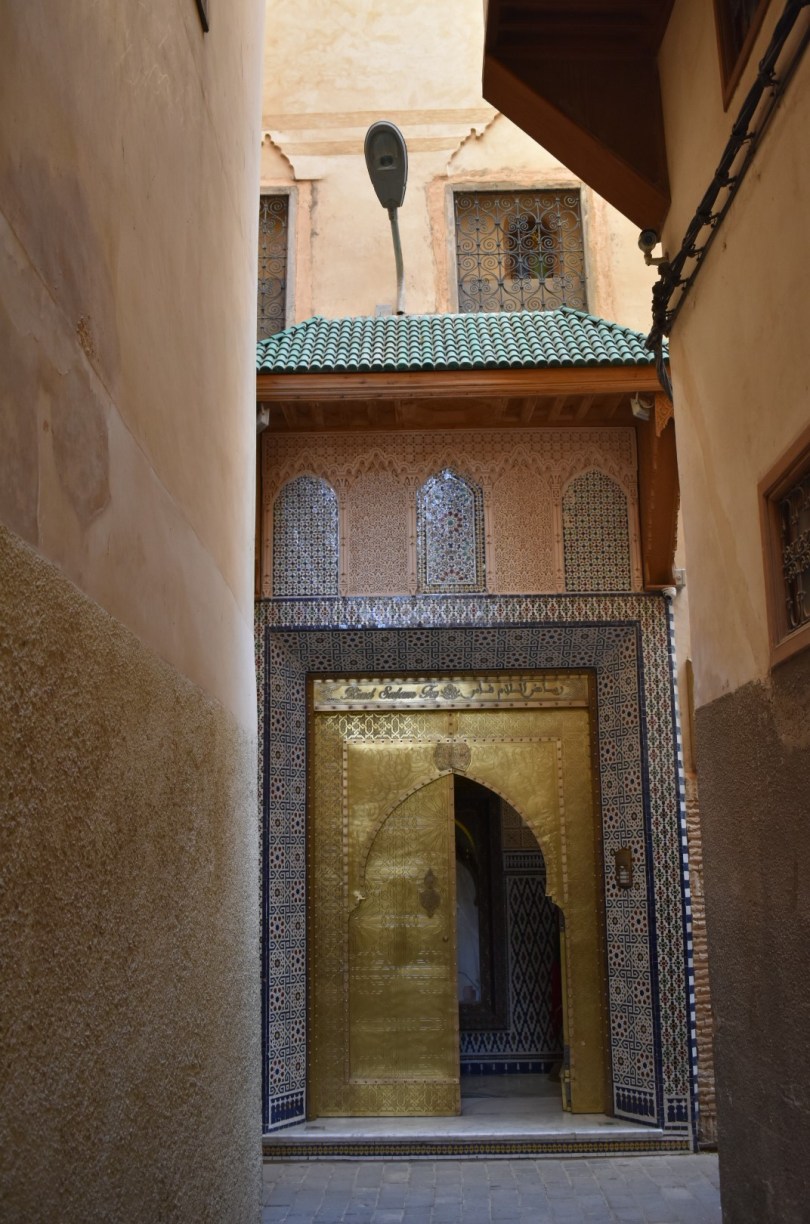
The entry door to the beautiful Riad Salam Fes, a promise of delights within…
Walking through the narrow streets of the Medina, passersby are oblivious to what might be on the other side of the unadorned brown walls. The large, polished brass entry doors were the first indication that something special might be waiting for us as we stepped off the street. Riad Salam Fes, formerly the home of a wealthy merchant and recently restored to it’s former glory has some of the finest zellij, (the Moroccan mosaic tile work Fez is famous for), plaster work, carved wood and brass work to be found in the city. Riad, means garden in Arabic, and a Riad is a house with rooms opening out onto a central courtyard garden.
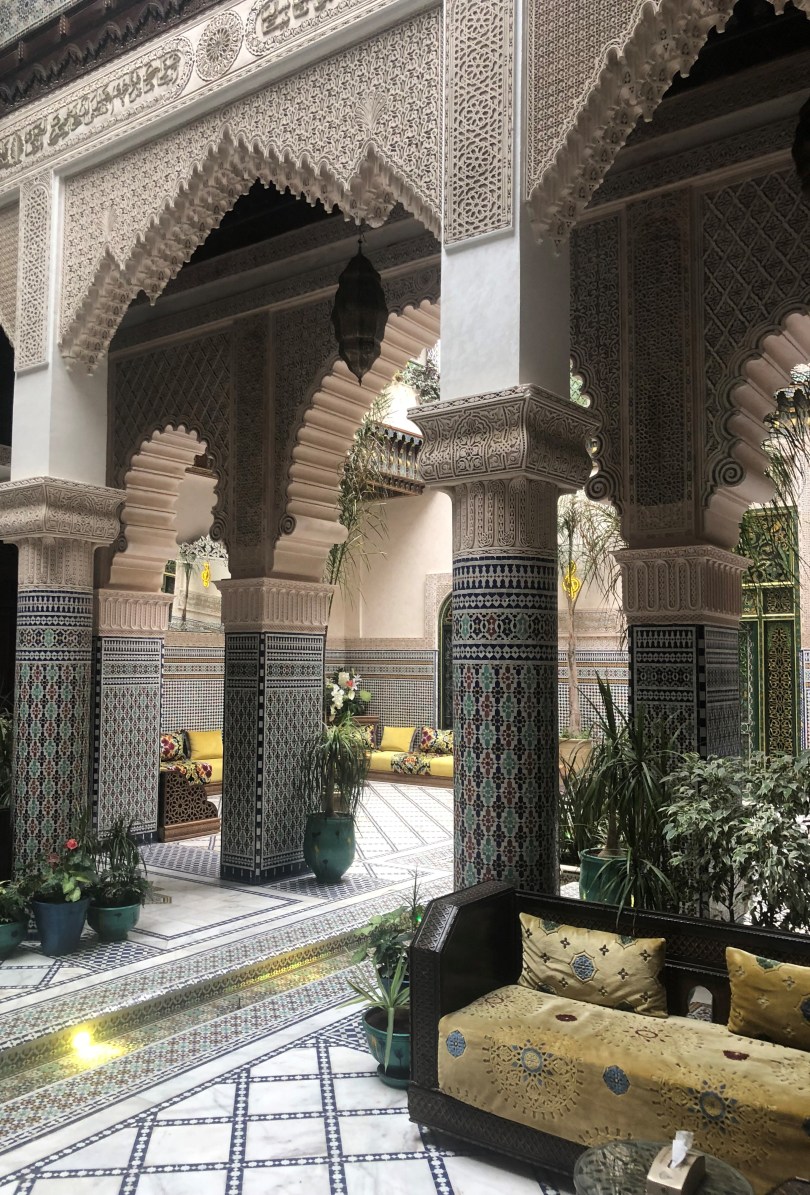
Opulence fit for a Queen, Riad Salam Fes
We spent only 2 nights in Fez and left feeling like you do after a trip to the beach where you’ve put only a toe in the water…
Later on the trip in Marrakesh, I picked up Tahir Shah’s Arabian Nights, a spellbinding account of the authors experiences living in Casablanca and travelling around Morocco; the people he meets, the efforts of his staff to drive Djinns out of the house, story telling traditions and tea drinking gentleman escaping from their domineering wives!
I realised leaving Morocco, armed with beautiful photos, that I’d seen with my eyes only what was on the surface and hadn’t truly experienced the layers of culture or the people in any depth. Its not easy as a tourist but I’ll definitely be going back to delve deeper.
To be continued….

View over Fez from the Borj Nord fortress
Here we are all of us; in a dream caravan,
A Caravan, but a dream – a dream, but a caravan,
And we know which are the dreams.
Therein lies the hope.
~ Sheikh Balaudin
From ‘In Arabian Nights’
 throughmyeyes19com